Large Scale Housing Project For Eskom Succesfully Delivered
 Background Information
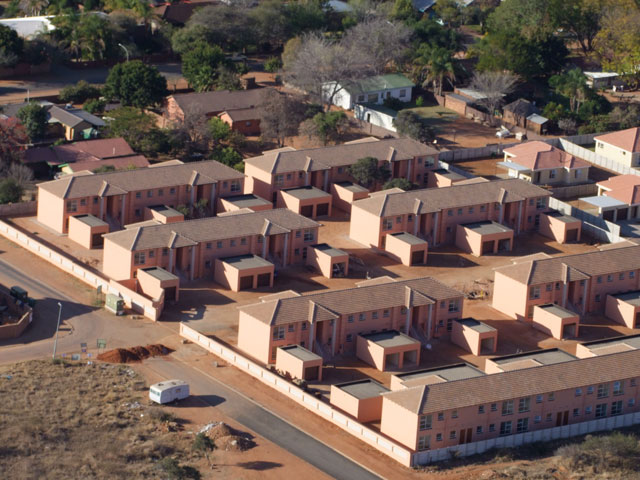
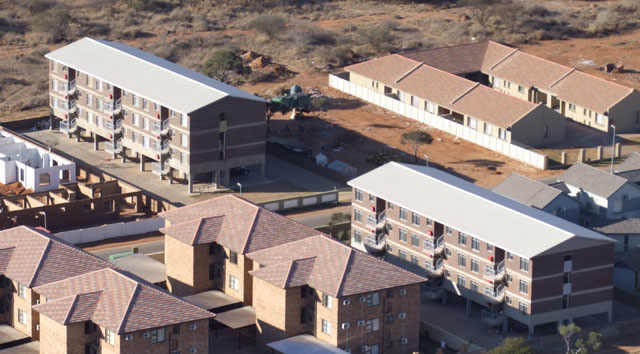
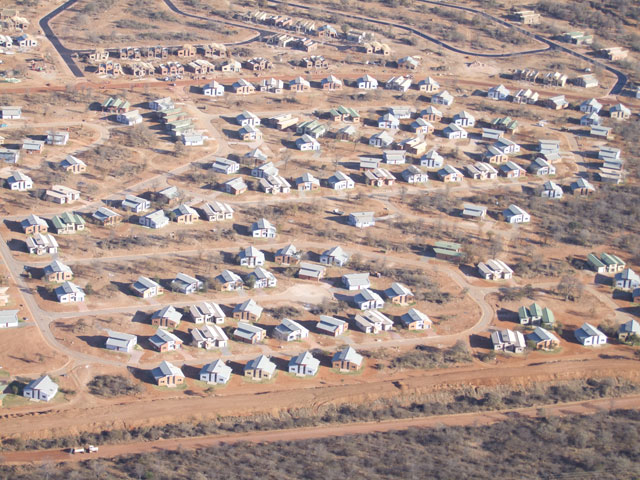
One of the major projects handled by the Architectural Division of Palace Technologies in 2009-2010 is Lephalale Housing Project for Eskom...
For which about one thousand, two hundred and eighty (1280) houses and apartments have been handed over to the Client, and an additional one thousand, one hundred and twelve (1112) houses and apartments have been designed.
In 2008, BKS-Palace Consortium was appointed by Eskom as Principal Agent for the construction of housing to accommodate personnel and contractors stationed at the Medupi Power Station Project.
Scope Of The Project
The overall scope of work for the Architectural Division consisted of:
- Supervision of the total construction process
- Administration of various construction contracts
- Implementation of a quality control system
- Monitoring of a Safety, Hygiene and Environmental control system
- Provision of comprehensive Professional Architectural Services, including design and supervision of the works.
Challenges Encountered
The main challenge for this project was predominately organisational and logistical created by the overall size of the project. The houses and apartments were of normal standard, from about 70m2 for the small apartments to 250m2 for the largest houses, which is a typical size for middle class income population.
Execution Of The Project
One thousand, two hundred and eighty (1280) houses were built and commissioned on about fifteen (15) different sites within twelve (12) months, which represents an average of more than five (5) houses delivered per working day for the entire duration of the construction period.
To achieve this, a team of eleven (11) members was established on site, and a team of about ten (10) members provided support services. The support team, based in Sandton, was in charge of the design, and technicians were sent to site from time to time, as requested, for technical inspections.
During the construction process, each house had to be inspected at least fifteen (15) times for earthworks, foundations, masonry (twice), roofing, plastering, doors and windows, finishes, plumbing and electrical as well as external works. Inspections also had to take place for practical completion, with snagging and de-snagging, and for final completion.
In total, more than twenty thousand (20,000) formal inspections have been conducted by the team during the construction period in addition to numerous safety inspection done randomly on all sites.
Each inspection provided an opportunity to resolve existing technical problems and anticipate possible future concerns.
Additional Customer Service
Once the keys were handed over to the Client, including all relevant documentation regarding each house (Occupancy Certificates from the Municipality, various certificates from all specialised trades, etc.), the team had to manage the period of guaranty of three months.
During this period of guaranty, each residential unit occupied by individuals and families was monitored, and any hidden defects that surfaced were immediately resolved. The team and contractors were constantly in standby to ensure that the Client is satisfied with the resultant project.
The team successfully completed this project despite the unfavorable weather conditions and incalculable cahhelenges which emerged from time to time.
"The tremendous pressure to deliver on our promise remained as customer satisfaction is of key importance for our division. I would like to congratulate my team for a job wel done" says Christophe Rolland: Divisional Executive, Architectural Division of Palace Technologies.
Below Are Some Of The Safety Statistics From The Project:
1. Number of employees: Peak during April 2009 : 2172
2. Number of Principal Contractors : 7
3. Total Project hours : 3 777 723 man hours
4. Hours worked after the lost time injury 30 June 2009: 1 710 935 man hours.
5. First aid cases reported : 31
6. Lost time injury : 1
7. Non lost time incidents (near hits) Incidents that have the possibility to cause harm : 1493
8. LTIFR(Lost time injury frequency rate) : 0.053
See the graph below for the type of incidents reported:
(Note: All incidents and first aid cases were handled and rectified)

To download the full article click here